How to Choose an Investment Strategy in China for the Next 10 Years: A 2026 Guide for Young Couples in Shanghai

How to Choose an Investment Strategy in China for the Next 10 Years: A 2026 Guide for Young Couples in Shanghai
China's household wealth is undergoing a once-in-a-generation rotation. Real estate's share of household assets has fallen from a peak of roughly 65-70% toward 58-60%, according to household balance-sheet analyses by McKinsey, Oliver Wyman and the China Household Finance Survey (CHFS) at Southwest University of Finance and Economics. The PBOC Urban Depositor Survey confirms the preference shift: the share of urban households naming real estate as their preferred investment has fallen to multi-year lows. The old default playbook — buy an apartment in a good district and wait for appreciation — no longer holds.
The current macro environment demands a deliberate strategy. Full-year 2024 CPI came in at just +0.2% year-on-year — far below the government's ~3% target — and in the first quarter of 2025 the CPI fell 0.1% year-on-year while the Core CPI rose just 0.5% (National Bureau of Statistics, 2025). Meanwhile, 10-year Chinese government bond yields fell to 1.74% by July 2026, near historic lows, and the general bank deposit rate sits at just 0.35% — a level that guarantees savers lose purchasing power to even muted inflation (Trading Economics, 2026; PBOC via Trading Economics, 2026). Household deposit balances reached ¥152.3 trillion RMB ($21 trillion) by the end of 2024, after adding ¥14.3 trillion in new savings that year alone — that's a wall of cash now seeking a better home (PBOC Financial Statistics, 2024).
This guide walks you through a six-step framework for building a diversified, 10-year investment portfolio suited to Shanghai's cost structure and China's policy direction — the same approach I've applied and refined while analyzing household portfolio shifts in China's major cities.
Key Takeaways
- Chinese households are rotating out of real estate (fell from ~65-70% to ~58-60% of total assets according to McKinsey/Oliver Wyman balance-sheet analyses, confirmed by the PBOC Urban Depositor Survey and CHFS, 2024).
- China's A-share market has 225 million investor accounts (end-2024), yet the CSI 300 returned ~15.2% total return in 2024 and trades at a ~13.5x P/E — a 30-40% discount to the S&P 500 (China Securities Index Company, Bloomberg/Wind, 2025).
- Gold has surged from ~4,076/oz by mid-2026 — with a $5,608 all-time high in January 2026 — and the PBOC has added gold for 14+ consecutive months (World Gold Council, China Gold Association, 2025).
- China's personal pension system (¥12,000/year tax-deductible cap per person) surpassed 70 million participants by June 2025, yet only ~30 million actively contribute — the most underused wealth tool for Shanghai's salaried couples (MOHRSS, 2025).
- In July 2026, China's 10-year government bond yield sits at 1.74% and the general deposit rate at 0.35% — a historically low-rate environment where holding too much cash guarantees a loss of purchasing power (Trading Economics, PBOC, 2026).
[INTERNAL-LINK: China's three-pillar pension system explained → pillar page on retirement planning in China]
Step 1: Establish Your Financial Foundation Before Investing
By the end of this step, you will have a 9-month safety net and zero high-interest consumer debt.
In 2024, China's household deposit balances exceeded ¥140 trillion RMB ($19-20 trillion) as families chose the certainty of bank deposits over volatile assets (PBOC Financial Statistics, 2024). That flight to safety reflects a rational response to uncertainty — and it is the right starting point for your own plan.
Before committing capital to any investment, you'll want to build three layers of protection first.
1. Emergency fund. Set aside six to nine months of Shanghai living expenses. For a typical young couple spending ¥15,000-25,000 per month on rent, food, transport and insurance, this means a target of ¥90,000-225,000. Keep this in a money-market fund (货基) yielding 1.5-2.0% or a high-yield savings account — liquid and penalty-free.
2. Eliminate high-interest debt. Credit card balances, consumer installment loans (花呗借呗), and peer-to-peer liabilities often carry effective annual rates of 8-18%. Paying these off guarantees a tax-free, risk-free "return" that no investment can reliably beat. Prioritize ruthlessly.
3. Basic insurance coverage. Term life and critical disease insurance (重疾险) protect your household from the single largest financial shock — the loss of an earner's income. For dual-income couples in Shanghai, coverage of 5-10x each partner's annual income is a sound baseline. Premiums for a healthy 30-year-old typically run ¥3,000-8,000/year for term life.
The opportunity cost of skipping this step is severe. Without a cushion, an unexpected job loss or medical expense forces you to liquidate investments at a loss or borrow at punitive rates. With it, you can invest consistently through market downturns instead of panicking.

[INTERNAL-LINK: Emergency fund guide for Shanghai residents → post on building a household safety net at Shanghai cost levels]
Step 2: Max Out the Personal Pension Account (¥12,000/Year Each)
By the end of this step, both spouses will have opened personal pension accounts funded to the annual cap, locking in an immediate tax reduction. It's the closest thing to free money China's tax code offers salaried workers — and it's available to anyone with a bank account and a tax ID.
By June 2025, China's personal pension system (个人养老金制度) had surpassed 70 million participants — with roughly 60 million accounts opened and approximately 30 million making active contributions — leaving nearly half of all accounts unfunded and forfeiting tax deductions worth up to ¥5,400 per year for Shanghai's top-bracket earners (Ministry of Human Resources and Social Security, 2025; NFRA data cited in industry reporting).
This is the single highest-return "investment" available to Shanghai's salaried couples, and most leave it on the table. That's money you're effectively handing back to the tax bureau every year you delay — so why wouldn't you claim it first?
Here is how the mechanics work. Each individual can contribute up to ¥12,000 per year into a personal pension account (personal pension individual account, 个人养老金资金账户). Contributions are deductible from taxable income at the time of deposit. Investment returns inside the account compound tax-deferred. At retirement, withdrawals are taxed at a reduced flat rate of 3% — far below the marginal rates many Shanghai professionals pay.
For a Shanghai couple in the 20-30% marginal tax bracket, maxing out both accounts delivers an immediate tax saving of:
- Lower bracket: ¥12,000 × 20% = ¥2,400/year per person, ¥4,800/year combined
- Higher bracket: ¥12,000 × 30% = ¥3,600/year per person, ¥7,200/year combined
Inside the account, you can allocate among four product categories: bank deposits, wealth management products, public mutual funds (养老目标基金/target-date funds), and commercial pension insurance. For young couples with a 20-30 year horizon, a 100% allocation to a low-cost target-date fund (养老目标日期基金) with a glidepath matching your retirement year is the most efficient choice.
Consider the long-term math of consistent contributions. Two spouses each contributing ¥12,000 per year — ¥24,000 total annually — invested at a realistic 5% real return over 30 years compounds to approximately ¥1.65 million. The same contributions kept in a 1.5% bank deposit grow to only ¥900,000. That's a ¥750,000 difference — the value of tax-deferred, market-linked compounding inside the pension wrapper.
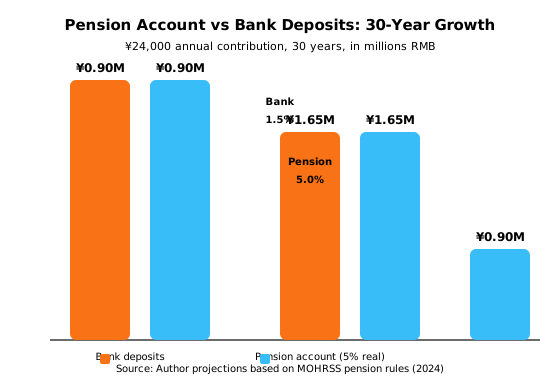
By mid-2025, over 70 million people had enrolled in the personal pension system, yet only about 30 million had actually contributed — meaning nearly half of all accounts sat empty, their tax benefits unclaimed (MOHRSS, 2025). The mechanics are straightforward: open a personal fund account through any of 23 designated banks, fund it up to ¥12,000 each per year, claim the tax deduction during annual 个税汇算清缴 (the tax app scans your contribution QR code), and let tax-deferred compounding work for 25-35 years. The window to maximize this benefit is widest when you're young — every year of delay is a year of compounding you'll never recover.
[INTERNAL-LINK: China's three-pillar pension system explained → pillar page on retirement planning in China]
Step 3: Build a Low-Cost Index Fund Core
By the end of this step, you will have set up a monthly systematic investment plan into a diversified basket of low-cost index ETFs.
China's mutual fund industry reached a record ¥30.76 trillion RMB ($4.3 trillion) in assets under management by the end of 2024 — breaking the ¥30 trillion mark for the first time — with broad-based index ETFs and bond funds capturing the majority of net inflows as retail investors moved away from picking individual stocks (Asset Management Association of China (AMAC), 2024).
Yet the data shows that most individual investors would have been better off in index funds. In China, approximately 70-80% of actively managed equity funds fail to beat the CSI 300 total-return index over rolling five-year periods, according to multiple academic studies and credit-rated agency analyses of fund persistence. For busy young couples, the rational choice is not to gamble on stock-picking — it is to buy the whole market at the lowest possible cost.
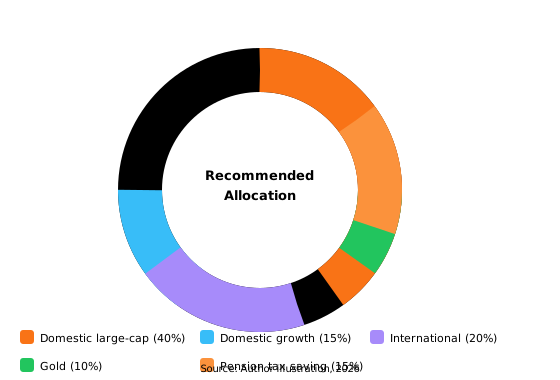
The core allocation for a Shanghai couple aged 28-32:
| Allocation | Product Type | Example Vehicles | Rationale |
|---|---|---|---|
| 40% Domestic large-cap | CSI 300 ETF | 华泰柏瑞沪深300ETF (510300) | Low-cost exposure to China's industrial, financial and consumption leaders |
| 15% Domestic growth | STAR 50 / ChiNext ETF | 华夏科创50ETF (588000) | Growth tilt toward tech, semiconductors, biotech — sectors central policy actively supports |
| 20% International | QDII ETF | 华夏纳斯达克100ETF (513300), 标普500ETF (513500) | Geographic diversification beyond capital controls; US/European productivity exposure |
The expense-ratio landscape in China has become competitive. Top-tier broad ETFs now carry total expense ratios below 0.20% — some below 0.10% for the largest products — making them cheaper than equivalent vehicles in most Western markets. Over a 20-year horizon, a 0.50% difference in annual fees compounds to roughly 10% of final portfolio value.
Implement through a monthly systematic investment plan (定投). A typical Shanghai couple might deploy ¥3,000-5,000 per month into a CSI 300 base, ¥1,000-1,500 into a STAR 50 satellite, and ¥1,000-2,000 into a QDII international sleeve. Automation removes emotion — you're buying more units when prices fall and fewer when they rise, which mechanically lowers your average cost over time.
Over the 10-year horizon from 2026 to 2036, China's GDP growth is projected by the IMF's World Economic Outlook to moderate toward the 3-4% range as the economy completes its transition from investment-led to consumption- and productivity-led growth (IMF WEO, 2025). Equities are the primary vehicle through which households capture that productivity growth. A disciplined index core gives you that capture without the risk of any single stock or sector torpedoing your retirement.
[INTERNAL-LINK: How to open a mutual fund account in China → step-by-step guide to QDII ETF investing]
Step 4: Add a Gold Allocation as a Real Hedge
By the end of this step, you will have allocated 5-10% of your investable portfolio to gold through the most cost-efficient vehicle available to you.
By mid-2026, gold trades above 2,062 — after setting an all-time high of $5,608 in January 2026. The 2024 calendar year alone saw the metal set roughly 40 new record highs and post a 23% gain in average annual LBMA price (World Gold Council Gold Demand Trends FY2025, 2025). Chinese households and the People's Bank of China alike have been significant buyers: the PBOC reported gold reserves of 2,306.32 tonnes at end-2025 after consecutive monthly additions stretching over 14 months, while China's total gold consumption reached ~985 tonnes in 2024 (China Gold Association, 2025).
Why does gold still matter in a portfolio full of tech ETFs and pension funds? Because it's the one asset that tends to rise precisely when everything else — property, equities, and fiat confidence — wobbles at the same time. Gold occupies a specific and rational role in a Shanghai-domiciled portfolio: not as a speculative bet, but as an insurance line.
Capital controls restrict the ability to diversify overseas. The individual foreign-exchange purchase quota remains capped at $50,000 per year per person, limiting meaningful geographic diversification through currency alone. Meanwhile, the traditional safe-haven alternatives offer thin compensation: the 10-year Chinese government bond yield sits at 1.74% (July 2026), the 1-year mortgage reference rate (LPR) has been cut to a record-low 3.0%, and the general bank deposit rate stands at just 0.35% (Trading Economics, 2026; PBOC LPR announcement, June 2026). Gold, which pays no yield, gains its value precisely when real yields fall and when confidence in fiat stores of value wavers — exactly the configuration China's markets show today.
How to allocate, practically:
- Gold ETFs (黄金ETF): The 华安黄金ETF (518880) is the largest, most liquid gold ETF on the Shanghai Stock Exchange, with an expense ratio around 0.60%. It tracks the AU9999 spot gold price with high fidelity and can be bought and sold intraday like a stock.
- Physical gold bars (实物金条): Banks including ICBC, CCB and Bank of China sell gold bars and operate gold accumulation plans (积存金/定投 gold), allowing gradual accumulation without custody cost. Spreads on physical bars are typically 2-4% over spot.
- Digital gold (积存金/e黄金): Offered through major bank apps, this lets you accumulate fractional gold from ¥1 with no storage concern, redeemable for physical bars or cash at prevailing prices.
A 5-10% portfolio allocation to gold is the range most academic research identifies as optimal for reducing portfolio volatility without sacrificing long-term return. Given China's specific macro risks — property market repricing, RMB trajectory, and the sovereign-debt dynamics of a rapidly aging society — leaning toward the higher end of that range (8-10%) is defensible for young Shanghai couples.
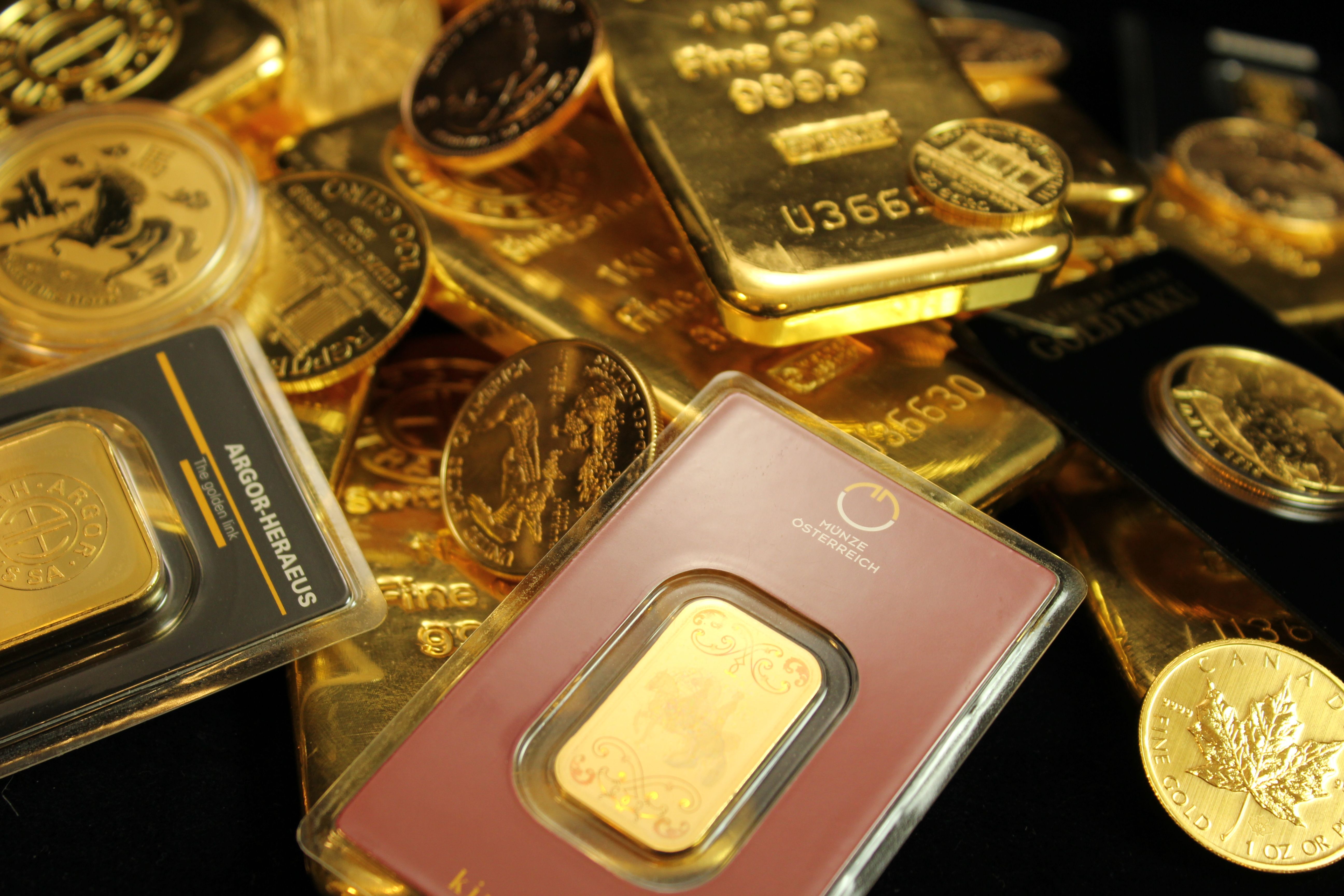
By mid-2026, gold has more than doubled from its end-2023 base, the PBOC has added reserves for over 14 consecutive months, and China's 2025 gold consumption data confirms investment bars and coins (504 tonnes) surpassed jewelry (364 tonnes) for the first time — a structural shift toward gold-as-investment rather than gold-as-ornament (World Gold Council, 2025; China Gold Association, 2025). The macro drivers — central-bank de-dollarization, geopolitical hedging, and structurally lower global real yields — few signs of reversing over the next decade.
[INTERNAL-LINK: Gold vs gold ETF pros and cons in China → comparison guide for Shanghai investors]
Step 5: Treat Property as a Consumption Decision, Not an Investment Strategy
By the end of this step, you will have calculated whether renting-and-investing or buying-and-holding makes financial sense for your specific Shanghai situation.
Shanghai's home price-to-income ratio remains extreme. In central districts (Huangpu, Xuhui, Jing'an, Changning), the ratio exceeds 30-35x — among the highest of any city globally — and even in outer rings the ratio sits at 15-25x for new couples on median household earnings of roughly ¥190,000-210,000 per year (NBS Urban Household Survey, 2024; Shanghai Municipal Statistics Bureau, 2024).
The old assumption that Shanghai property consistently appreciated shattered after 2022. The NBS 70-City Price Index recorded extended declines in the secondary market through 2023, with tier-1 cities including Shanghai seeing secondary prices fall 10-20% from peak in real terms by 2024, even as new-home prices were partially supported by developer delivery guarantees (National Bureau of Statistics 70-City Index, 2024).
This does not mean you should never buy. It means you should buy for the right reasons and with eyes open to the numbers.
The rent-vs-buy Shanghai math for a young couple:
Consider a typical Shanghai couple, both 30, eyeing a two-bedroom apartment in a mid-ring district (e.g., Putuo, Yangpu, Minhang) at a market price of ¥4-5 million. A 70% mortgage at ~3.5% (first-home rate as of 2025-2026) means a down payment of ¥1.2-1.5 million and monthly payments of roughly ¥13,000-16,000. Renting an equivalent unit costs ¥6,000-9,000 per month.
The gap — ¥5,000-8,000 per month — is the "invest the difference" surplus. Had that ¥1.2-1.5 million down payment plus the monthly gap been deployed into a balanced portfolio earning a moderate 5-6% real return over 10 years, it would compound to a sum that rivals or exceeds the likely net equity gain on the property after transaction taxes (增值税/个税/中介费, often 5-10% combined), maintenance, and the opportunity cost of the capital parked in bricks.
When buying still makes sense in Shanghai:
- You plan to stay in the same unit for 7-10+ years (transaction costs require time to amortize)
- Your jobs are stable and in the same PT-line radius
- You need a specific school-district household registration (学区房/户口) that only ownership secures
- You have already built the diversified financial portfolio above and view property as an additional diversifier
When renting + investing wins:
- You may relocate within five years for career progression
- You would need to stretch the budget beyond 40% of monthly income toward the mortgage
- You have not yet maxed out the pension account, the emergency fund, or a ¥100,000+ index-fund base
[INTERNAL-LINK: Rent vs buy calculator for Shanghai districts → interactive tool for young couples]
Step 6: Diversify Globally Within Capital Control Boundaries
By the end of this step, you will have deployed 10-20% of your financial portfolio into overseas assets using QDII and Stock Connect channels.
By mid-2025, China's aggregate QDII quota exceeded $150 billion and has continued to expand in sequential batches approved by the State Administration of Foreign Exchange to channel domestic savings into global markets through licensed institutions (SAFE QDII Quota Table, updated June 2026). The cross-border Wealth Management Connect program, operational since 2022, added a further regulated route for Greater Bay Area and neighboring retail investors, and the Shanghai-Hong Kong and Shenzhen-Hong Kong Stock Connect programs continue to be the most accessible channel for Shanghai-based investors.
Why geographic diversification is not optional for a Shanghai-domiciled portfolio: concentration risk is the single greatest threat. Your human capital (your salary) is already denominated in RMB and correlates with China's economic cycle. Your property sits in Shanghai. Your pension account holds RMB-denominated assets. Without deliberate overseas exposure, every meaningful asset you own rises and falls with a single economy, a single currency, a single policy regime.
The practical channels available to a Shanghai couple:
| Channel | Instrument | Typical Overseas Exposure | Accessibility |
|---|---|---|---|
| QDII ETF | Exchange-traded funds on SSE/SZSE | S&P 500, Nasdaq 100, MSCI Europe, TOPIX (Japan) | Open a brokerage account; trade during A-share hours |
| QDII Mutual Fund | Actively managed global funds | Global equity, global bond, REITs | Via bank/fund platform app (天天基金/支付宝/券商App) |
| Stock Connect (港股通) | Hong Kong-listed stocks and ETFs | Tracker Fund (2800.HK), iShares China, Hong Kong blue chips | Requires ¥500,000 account threshold; trade HK-listed products |
| Cross-border Wealth Management Connect | HK/Macau bank wealth products | USD/EUR deposits, HK-denominated funds | Available in Greater Bay Area; Shanghai couples may qualify through employment links |
A practical allocation for a young Shanghai couple: deploy 10-15% of investable financial assets into a QDII S&P 500 or Nasdaq 100 ETF, and 5% into broader Asian ex-China exposure through Stock Connect-listed ETFs. This delivers exposure to US technology productivity, European and Japanese industrials, and global consumer brands — precisely the sectors underrepresented in a China-only portfolio.
Keep the FX purchase quota in perspective: the $50,000/year per-person SAFE quota is useful for funding overseas education, travel, or emergency needs, but it should not be confused with an investment channel — converting RMB to USD cash and holding it in a US checking account at near-zero interest is a depreciating strategy, not a diversifying one. Use QDII and Stock Connect as your primary overseas allocation tools.
China's QDII quota has been expanded in sequential batches beyond $150 billion, reflecting a policy acknowledgement that regulated overseas investment channels reduce pressure on the capital account while giving households access to global returns (SAFE QDII Quota Table, 2026). For Shanghai couple portfolios in 2026-2036, a 15% overseas allocation split between US index ETFs and Hong Kong/Asia products provides meaningful geographic diversification without betting against the domestic economy. Note: the Cross-border Wealth Management Connect program remains limited to Greater Bay Area residents and is not directly accessible to Shanghai-based investors.
[INTERNAL-LINK: QDII ETF comparison guide 2026 → which US/global index ETFs are most cost-efficient]
Common Mistakes Young Shanghai Couples Make with Money
The most common and costly mistake is concentrating more than 80% of net worth in a single illiquid Shanghai property while holding zero financial assets — a strategy that worked until 2021 and has since trapped a generation in negative equity or forced selling. Here are four others that recur constantly.
Mistake 1: Chasing yield in opaque wealth-management products. Many WMPs still promise "expected yields" of 4-6% without transparent underlying collateral. When the property-developer bond defaults cascaded through 2021-2023, several WMPs tied to developer debt were written down or restructured. The fix: read the底层资产 (underlying asset allocation) before buying anything that promises a yield more than 1.5x the deposit rate.
Mistake 2: Day-trading A-shares instead of long-term index investing. China reached 225 million A-share investor accounts by end-2024 (224 million of them individual investors, per China Securities Depository and Clearing data), yet academic and broker research consistently shows the majority of active retail traders underperform the CSI 300 after costs and taxes. The fix: replace trading with monthly index-fund SIPs. You are not smarter than the institutions you are trading against.
Mistake 3: Ignoring the pension account tax benefit. With 70+ million enrolled but only ~30 million actively contributing, most Shanghai professionals are leaving a ¥2,400-5,400 annual tax rebate on the table (¥12,000 × your marginal rate). The fix: open the account and max it out before investing a single yuan in taxable brokerage products.
Mistake 4: Parking capital in 0.35% or lower demand deposits. Even as money-market funds deliver 1.5-2.0% with instant or next-day liquidity, many couples keep surpluses of ¥100,000-500,000 in ordinary savings accounts at 0.35% — a rate that locks in a guaranteed real loss even at China's muted inflation. The fix: sweep excess cash above your emergency fund into money-market or ultra-short bond funds — the incremental ¥2,000-8,000/year of income on a ¥300,000 balance is free.
[INTERNAL-LINK: Financial independence calculator for Shanghai couples → tool to model your path to FI]
Frequently Asked Questions
How much should a Shanghai couple save each month for investing?
Financial planners commonly suggest saving 20-30% of post-tax household income. For a dual-income Shanghai couple earning ¥190,000-250,000 after tax, that translates to roughly ¥3,200-6,250 per month. In 2024, Shanghai's urban households saved at an estimated rate of approximately 25-30% of disposable income — above the national average, reflecting both elevated savings caution and limited investment alternatives (Shanghai Municipal Statistics Bureau, 2024). Start at whatever level you can sustain, then increase by 1-2 percentage points annually as salary grows.
Is it still worth buying property in Shanghai as an investment in 2026?
Shanghai property in 2026 is a consumption hedging tool, not a wealth-building strategy. With central-district price-to-income ratios above 30x, secondary prices down 10-20% in real terms from peak, and the NBS 70-City Index recording near-universal year-on-year declines across all 70 cities for secondary homes, the leveraged guaranteed-return property play is over (National Bureau of Statistics, 2024). Buy for genuine long-term housing need and school-district access; do not buy expecting 2010-2020-style appreciation to resume.
What is the best way for Chinese residents to invest in US stocks?
QDII ETFs listed on the Shanghai or Shenzhen stock exchanges are the most cost-efficient route. Products such as the S&P 500 ETF (513500) and Nasdaq 100 ETF (513300) trade during normal A-share hours, are RMB-denominated, and carry expense ratios of 0.30-0.80%. They fall under the existing QDII quota framework regulated by SAFE and require no individual FX quota usage (SAFE, 2025).
How does the personal pension account tax deduction actually work?
Each individual can contribute up to ¥12,000 per year into a personal pension account. Contributions are excluded from current taxable income, reducing your annual tax burden by ¥2,400-5,400 depending on your marginal bracket (10-45%). Investment returns grow tax-deferred, and withdrawals at retirement are taxed at a flat 3% rate. A Shanghai couple in the 20% bracket who both max the account saves ¥4,800 in combined annual tax — money that compounds inside the account for 25-35 years. Meanwhile, with 70+ million enrollees yet only ~30 million active contributors, the odds are good your household is leaving exactly this benefit unclaimed (MOHRSS, 2025).
What is a safe allocation to gold in a China-focused portfolio?
Academic portfolio research generally identifies 5-10% as the gold allocation that optimally balances volatility reduction against long-term return dilution. Given China's specific macro risks — repricing property, RMB trajectory, and the sovereign-debt dynamics of an aging society — leaning toward 8-10% is defensible for young Shanghai couples. The 华安黄金ETF (518880) remains the most liquid and cost-efficient domestic vehicle (World Gold Council, 2025).
Conclusion: Your 10-Year Game Plan Starts This Month
China's economy is transitioning into a mature, lower-growth, consumption-and-productivity-driven phase. The investment rules that built wealth for your parents' generation — primarily property — no longer apply. The couples who build real wealth over the next decade in Shanghai will be those who diversify deliberately across pension wrappers, index funds, gold, property, and global assets in proportions that match their own timeline and risk tolerance.
The six steps in this guide form a sequence: safety net first (emergency fund, debt, insurance), then the free money (pension), then the growth engine (index core), then the hedge (gold), then the honest property conversation, then the overseas diversification. None of them require market timing. All of them reward consistency.
This month, start with the two highest-impact moves: open and fund personal pension accounts for both spouses, and sweep any cash above your six-month emergency fund into a money-market vehicle instead of a 0.35% savings account. Those two actions alone will put you ahead of most Shanghai couples your age.
[INTERNAL-LINK: Financial independence calculator for Shanghai couples → model your own path to FI with a diversified portfolio]
Methods and data notes. Statistics cited in this article are drawn from official Chinese government sources (PBOC, NBS, MOHRSS, SAFE, CSRC), international bodies (IMF World Economic Outlook, World Gold Council, China Gold Association), industry data (Asset Management Association of China, China Securities Depository and Clearing, Banking Wealth Management Registration & Custody Center, China Household Finance Survey), and tier-2 financial data platforms (Trading Economics, Wind Information, Bloomberg, East Money). Balance-sheet asset allocation percentages are sourced from McKinsey and Oliver Wyman wealth reports triangulated with CHFS microdata. Forward-looking projections for pension growth, rent-vs-buy outcomes and portfolio returns are illustrative and based on stated assumptions (5% real return, 1.5% deposit rate, 3.5% mortgage rate); they do not represent guaranteed outcomes. Gold prices reflect LBMA PM Fix and COMEX references as of the cited dates. This article provides general financial education, not personalized investment advice.